Salamanders
Long-toed Salamander
Ambystoma macrodactylum
Across the regions where it's common, the Long-toed Salamander peaks from February to April.
Shows up in 7 ecoregions and 5 states
Keep Herp Calendar free
Hi, I'm Nick. I built Herp Calendar on my own and I keep it free, with no ads. If it has helped you find a herp this season, a small tip goes straight into the hosting and the data work. Only if you can spare it. Either way, I'm glad you're here.
Salamanders
Long-toed Salamander
Ambystoma macrodactylum
Description
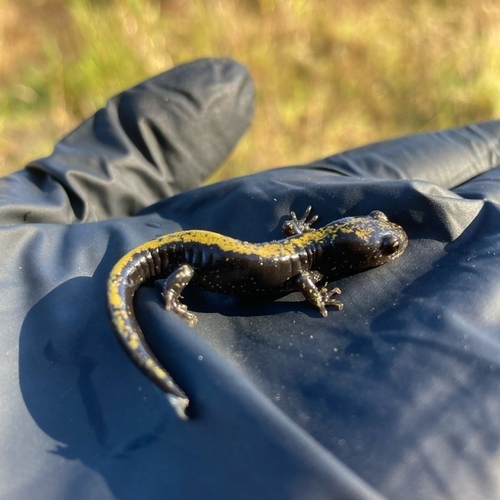
The long-toed salamander (Ambystoma macrodactylum) is a mole salamander in the family Ambystomatidae. Summary of distinguishing skin patterns and morphological features for the subspecies include: A. m. croceum Orange dorsal color on tail breaking into patches along black body and into tiny dots on head, often absent anterior to eyes.Wikipedia ↗
Habitat
Mitochondrial DNA analysis identifies somewhat different ranges for the subspecies lineages. The genetic analysis, for example, identifies an additional pattern of deep divergence in the eastern part of the range.Wikipedia ↗
When it's active
The time of breeding depends on the elevation and latitude of the salamander's habitat. Generally, the lower-elevation salamanders breed in the fall, winter, and early spring.Wikipedia ↗
When and where it's active
Each row is its own calendar, counted from records in that area. Seasons shift by place.
Ecoregions
States
About the Long-toed Salamander
When is the Long-toed Salamander most active?
Across the regions where it's common, the Long-toed Salamander peaks from February to April.
Where does the Long-toed Salamander live?
It has enough records to show in 7 ecoregions and 5 states, including California, Idaho, Montana, and Oregon.