Frogs and Toads
Oak Toad
Anaxyrus quercicus
Across the regions where it's common, the Oak Toad peaks from March to November.
Shows up in 2 ecoregions and 2 states
Keep Herp Calendar free
Hi, I'm Nick. I built Herp Calendar on my own and I keep it free, with no ads. If it has helped you find a herp this season, a small tip goes straight into the hosting and the data work. Only if you can spare it. Either way, I'm glad you're here.
Frogs and Toads
Oak Toad
Anaxyrus quercicus
Description
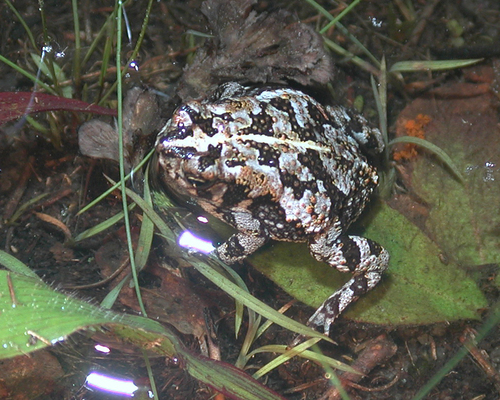
The oak toad (Anaxyrus quercicus) is a species of toad in the family Bufonidae that is endemic to the coastal regions of southeastern United States. The female has a dark-spotted belly and the male has a clear white belly with a slightly distended, loose flap of skin beneath the mouth that expands into a vocal sac.Wikipedia ↗
Habitat
The oak toad is native to the coastal regions of the southeastern United States, ranging from eastern Louisiana to southeast Virginia and south throughout Florida. It is found in a variety of habitats, including sandy pine flatwoods and oak scrub, open pine and pine-oak woods, pine or oak savanna with sandy soils, and maritime forests.Wikipedia ↗
When it's active
Oak toads are mostly diurnal and spend much of the time burrowed into the loose soil of their habitat. They may remain in burrows during the winter, often in hibernation.Wikipedia ↗
When and where it's active
Each row is its own calendar, counted from records in that area. Seasons shift by place.
Ecoregions
States
About the Oak Toad
When is the Oak Toad most active?
Across the regions where it's common, the Oak Toad peaks from March to November.
Where does the Oak Toad live?
It has enough records to show in 2 ecoregions and 2 states, including Florida and Mississippi.