Frogs and Toads
Barking Tree Frog
Dryophytes gratiosus
Across the regions where it's common, the Barking Tree Frog peaks from April to September.
Shows up in 2 ecoregions and 7 states
Keep Herp Calendar free
Hi, I'm Nick. I built Herp Calendar on my own and I keep it free, with no ads. If it has helped you find a herp this season, a small tip goes straight into the hosting and the data work. Only if you can spare it. Either way, I'm glad you're here.
Frogs and Toads
Barking Tree Frog
Dryophytes gratiosus
Description
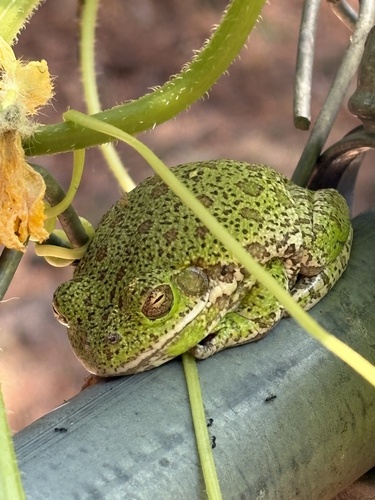
Dryophytes gratiosus, commonly known as the barking tree frog, is a species of tree frog endemic to the south-eastern United States. Dryophytes gratiosus is the largest native tree frog in the United States, acquiring its name from the raucous and explosive call.Wikipedia ↗
Habitat
A temporary population was found in New Jersey in 1957. Adult Dryophytes gratiosus usually live in trees or bushes.Wikipedia ↗
When it's active
It may also utter a repetitive single-syllable mating call. The calls of the barking tree frog sound like a church bell and have been described as "tonk" and "doonk".Wikipedia ↗
When and where it's active
Each row is its own calendar, counted from records in that area. Seasons shift by place.
Ecoregions
States
About the Barking Tree Frog
When is the Barking Tree Frog most active?
Across the regions where it's common, the Barking Tree Frog peaks from April to September.
Where does the Barking Tree Frog live?
It has enough records to show in 2 ecoregions and 7 states, including Alabama, Florida, Georgia, and Mississippi.