Salamanders
Spring Salamander
Gyrinophilus porphyriticus
Across the regions where it's common, the Spring Salamander peaks from February to May.
Shows up in 6 ecoregions and 11 states
Keep Herp Calendar free
Hi, I'm Nick. I built Herp Calendar on my own and I keep it free, with no ads. If it has helped you find a herp this season, a small tip goes straight into the hosting and the data work. Only if you can spare it. Either way, I'm glad you're here.
Salamanders
Spring Salamander
Gyrinophilus porphyriticus
Description
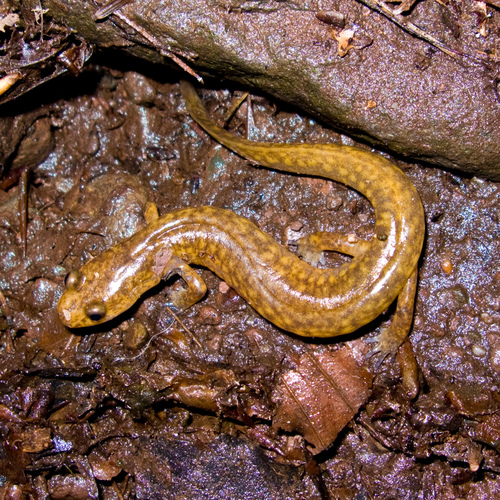
The spring salamander (Gyrinophilus porphyriticus) is a species of salamander in the family Plethodontidae (lungless salamanders). The subspecies G. p. porphyriticus and G. p. duryi can be 4.75–7.5 in (12.1–19.1 cm) long.Wikipedia ↗
Habitat
This species is found in cool springs and mountain springs, but is also likely to be found in any wet depression beneath logs, stones, or leaves in the surrounding forest. During the colder months of the year, the salamanders will spend their time in wet soil close to a source of water where they remain somewhat active in burrows, or in the leaf litter near a stream or other body of water.Wikipedia ↗
When it's active
Spring Salamanders commonly breed in late summer into fall. The larvae may stay around the mother after hatching but do not directly depend on her.Wikipedia ↗
When and where it's active
Each row is its own calendar, counted from records in that area. Seasons shift by place.
Ecoregions
States
About the Spring Salamander
When is the Spring Salamander most active?
Across the regions where it's common, the Spring Salamander peaks from February to May.
Where does the Spring Salamander live?
It has enough records to show in 6 ecoregions and 11 states, including Georgia, Kentucky, Maryland, and New York.