Lizards
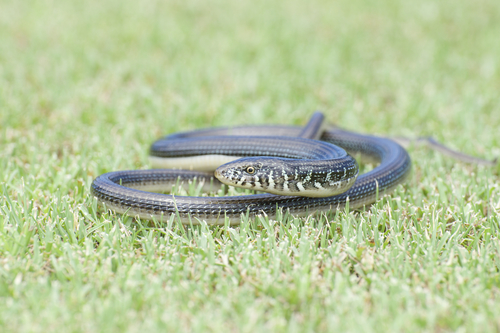
Eastern Glass Lizard
Ophisaurus ventralis
Across the regions where it's common, the Eastern Glass Lizard peaks from March to October.
Shows up in 2 ecoregions and 6 states
Keep Herp Calendar free
Hi, I'm Nick. I built Herp Calendar on my own and I keep it free, with no ads. If it has helped you find a herp this season, a small tip goes straight into the hosting and the data work. Only if you can spare it. Either way, I'm glad you're here.
Lizards
Eastern Glass Lizard
Ophisaurus ventralis
Description
The eastern glass lizard (Ophisaurus ventralis) is a species of legless lizard in the family Anguidae and the longest and heaviest species of glass lizards in the genus Ophisaurus, endemic to the Southeastern United States. Adults of O. ventralis grow to 46–108 cm (18–43 in) in total length, although the head-body length is only 30.5 cm (12.0 in) at most.Wikipedia ↗
Habitat
O. ventralis habitat consists of flatwoods adjacent to wetlands with sandy soils. They have also been found in tidal areas such as coastal dunes because they are resistant to salty conditions.Wikipedia ↗
When it's active
O. ventralis is oviparous and lays around 5–15 eggs in late April to mid July. The eggs have an incubation time of 40-65 days and will tend to hatch around late summer.Wikipedia ↗
When and where it's active
Each row is its own calendar, counted from records in that area. Seasons shift by place.
Ecoregions
States
About the Eastern Glass Lizard
When is the Eastern Glass Lizard most active?
Across the regions where it's common, the Eastern Glass Lizard peaks from March to October.
Where does the Eastern Glass Lizard live?
It has enough records to show in 2 ecoregions and 6 states, including Alabama, Florida, Georgia, and Mississippi.