Frogs and Toads
Strecker's Chorus Frog
Pseudacris streckeri
Across the regions where it's common, the Strecker's Chorus Frog peaks from December to March.
Shows up in 2 ecoregions and 1 state
Keep Herp Calendar free
Hi, I'm Nick. I built Herp Calendar on my own and I keep it free, with no ads. If it has helped you find a herp this season, a small tip goes straight into the hosting and the data work. Only if you can spare it. Either way, I'm glad you're here.
Frogs and Toads
Strecker's Chorus Frog
Pseudacris streckeri
Description
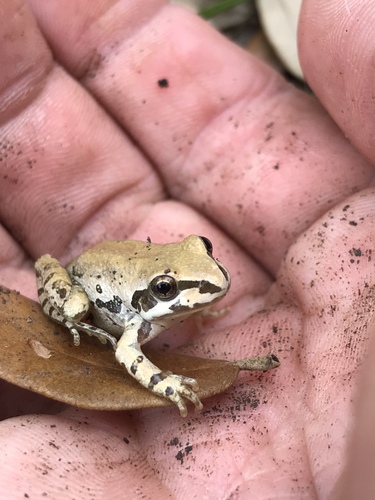
Strecker's chorus frog (Pseudacris streckeri) is a species of nocturnal tree frog native to the south central United States, from southern Kansas, through Oklahoma and east to Arkansas, the northwestern tip of Louisiana and south throughout much of Texas. Strecker's chorus frogs can attain a size of approximately 1.5 inches (about 3.5 cm).Wikipedia ↗
Habitat
Pseduacris streckeri, also known as Strecker's chorus frog, is found in portions of the United States west of the Rocky Mountains, which acts as a geographic barrier. The range extends from southern Kansas to southern Texas.Animal Diversity Web ↗
When it's active
Mating occurs in winter months, usually starting in November and continuing until March. Variations in breeding season are dependent on the amount of rainfall that occurs in those months.Animal Diversity Web ↗
When and where it's active
Each row is its own calendar, counted from records in that area. Seasons shift by place.
Ecoregions
States
About the Strecker's Chorus Frog
When is the Strecker's Chorus Frog most active?
Across the regions where it's common, the Strecker's Chorus Frog peaks from December to March.
Where does the Strecker's Chorus Frog live?
It has enough records to show in 2 ecoregions and 1 states, including Texas.