Frogs and Toads
Mexican Burrowing Toad
Rhinophrynus dorsalis
Across the regions where it's common, the Mexican Burrowing Toad peaks from March to July.
Shows up in 1 ecoregion and 1 state
Keep Herp Calendar free
Hi, I'm Nick. I built Herp Calendar on my own and I keep it free, with no ads. If it has helped you find a herp this season, a small tip goes straight into the hosting and the data work. Only if you can spare it. Either way, I'm glad you're here.
Frogs and Toads
Mexican Burrowing Toad
Rhinophrynus dorsalis
Description
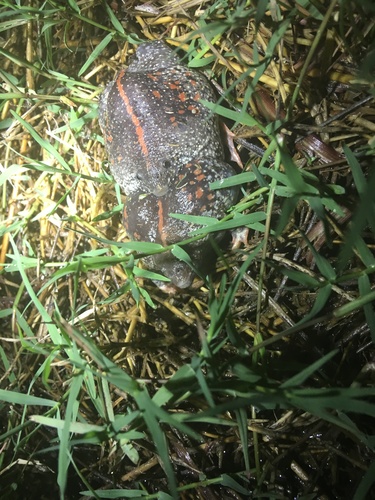
The Mexican burrowing toad (Rhinophrynus dorsalis) is the single living representative of the family Rhinophrynidae. This species' body is flat with a width and length that are almost equal.Wikipedia ↗
Habitat
The Mexican burrowing toad is found in tropical and subtropical dry broadleaf forest, savannas, and thorn scrub (e.g. Tamaulipan mezquital) in the lowlands of Central America, Mexico, and extreme south Texas, USA. Its natural habitats include forest, savanna, shrubland, grassland, and inland wetlands.Wikipedia ↗
When it's active
This species has a characteristically short and explosive breeding period, often lasting only one to three days. Due to the absence of male-male competition and territoriality, females select their mates based on the frequency and tonality of advertisement calls.Wikipedia ↗
When and where it's active
Each row is its own calendar, counted from records in that area. Seasons shift by place.
Ecoregions
States
About the Mexican Burrowing Toad
When is the Mexican Burrowing Toad most active?
Across the regions where it's common, the Mexican Burrowing Toad peaks from March to July.
Where does the Mexican Burrowing Toad live?
It has enough records to show in 1 ecoregions and 1 states, including Texas.