← Herp Calendar map
Salamanders
Two-toed Amphiuma
Amphiuma means
Across the regions where it's common, the Two-toed Amphiuma peaks from March to June.
Shows up in 3 ecoregions and 1 state
Keep Herp Calendar free
Hi, I'm Nick. I built Herp Calendar on my own and I keep it free, with no ads. If it has helped you find a herp this season, a small tip goes straight into the hosting and the data work. Only if you can spare it. Either way, I'm glad you're here.
Salamanders
Two-toed Amphiuma
Amphiuma means
Look, don't take. Many states regulate collecting reptiles and amphibians. Photograph it, log it on iNaturalist and leave it where you found it.
Description
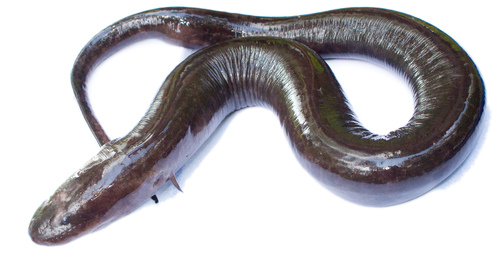
The two-toed amphiuma (Amphiuma means) is an aquatic salamander widely distributed in the southeastern United States. Two-toed amphiumas are the most prominent in the Amphiumidae family and the longest salamander species in the United States, that can grow from 39 to 1,042 g (1.4 to 36.8 oz) in mass and from 34.8 to 116 cm (13.7 to 45.7 in) in length.Wikipedia ↗
Habitat
Amphiumas live in areas of shallow, heavily vegetated water in swamps, bayous, lakes, and ponds, as well as wet prairies. Their range includes southeastern Virginia, eastern North Carolina, South Carolina, southern Georgia and Alabama, Florida, south Mississippi, Arkansas, Louisiana, and southeastern Texas.Wikipedia ↗
When it's active
Two-toed amphiumas are nocturnal, and are often difficult to handle because of their slippery skins. Amphiumas breed from June to July in North Carolina and northern Florida.Wikipedia ↗
When and where it's active
Each row is its own calendar, counted from records in that area. Seasons shift by place.
PeakShoulderQuiet
Ecoregions
JanFebMarAprMayJunJulAugSepOctNovDec
Southern Coastal PlainSoutheastern PlainsMid-Atlantic Coastal PlainStates
JanFebMarAprMayJunJulAugSepOctNovDec
FloridaAbout the Two-toed Amphiuma
When is the Two-toed Amphiuma most active?
Across the regions where it's common, the Two-toed Amphiuma peaks from March to June.
Where does the Two-toed Amphiuma live?
It has enough records to show in 3 ecoregions and 1 states, including Florida.