Snakes
Tamaulipan Milksnake
Lampropeltis annulata
The Tamaulipan Milksnake's peak months vary by region.
Shows up in 0 ecoregions and 1 state
Keep Herp Calendar free
Hi, I'm Nick. I built Herp Calendar on my own and I keep it free, with no ads. If it has helped you find a herp this season, a small tip goes straight into the hosting and the data work. Only if you can spare it. Either way, I'm glad you're here.
Snakes
Tamaulipan Milksnake
Lampropeltis annulata
Description
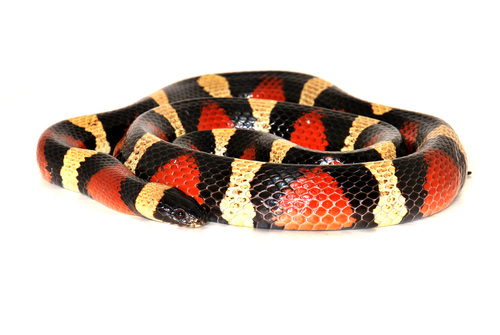
Lampropeltis annulata, commonly known as the Mexican or Tamaulipan milksnake, is a non-venomous species of milksnake (family Colubridae). The Mexican milksnake has distinct red, black and cream or yellow-colored banding, wrapping around the body.Wikipedia ↗
Habitat
It is native to northwestern Mexico and some adjacent Mexico–United States border regions.Wikipedia ↗
When it's active
Like many snakes, L. annulata tend to be nocturnal or crepuscular in lifestyle, mostly preferring to hide when the daytime temperatures are at their highest and becoming most active in the cooler periods of the day, especially from the spring to the fall. Contrastingly, winter lows can reach near-freezing, even experiencing snowfall in some areas.Wikipedia ↗
Often mistaken for
When and where it's active
Each row is its own calendar, counted from records in that area. Seasons shift by place.
States
About the Tamaulipan Milksnake
When is the Tamaulipan Milksnake most active?
The Tamaulipan Milksnake's peak months vary by region.
Where does the Tamaulipan Milksnake live?
It has enough records to show in 0 ecoregions and 1 states, including Texas.
What does the Tamaulipan Milksnake look like?
It's often confused with the Eastern Coralsnake, Texas Coralsnake, and Sonoran Coralsnake.