Snakes
Texas Coralsnake
Micrurus tener
Across the regions where it's common, the Texas Coralsnake peaks from April to November.
Shows up in 4 ecoregions and 1 state · venomous
Keep Herp Calendar free
Hi, I'm Nick. I built Herp Calendar on my own and I keep it free, with no ads. If it has helped you find a herp this season, a small tip goes straight into the hosting and the data work. Only if you can spare it. Either way, I'm glad you're here.
Snakes
Texas Coralsnake
Micrurus tener
Description
Micrurus tener, commonly known as the Texas coral snake and el coralillo tejano in Mexican Spanish, is a species of venomous snake in the family Elapidae. The Texas coral snake has the traditional coloration associated with coral snakes: black, yellow, and red rings.Wikipedia ↗
Habitat
The Texas coral snake ranges from the southern United States south to northeastern and central Mexico. The species is native to the southern and southwestern United States and adjacent northeastern and central Mexico.Wikipedia ↗
When it's active
All coral snakes are shy, secretive animals, typically nocturnal.Wikipedia ↗
Venom
Texas coral snake venom contains neurotoxin and myotoxin. The Texas coral snake can deliver 10–12 mg (dry weight) of venom in a single bite, which is approximately twice the lethal dose for an adult human of 5–7 mg (dry weight).Wikipedia ↗
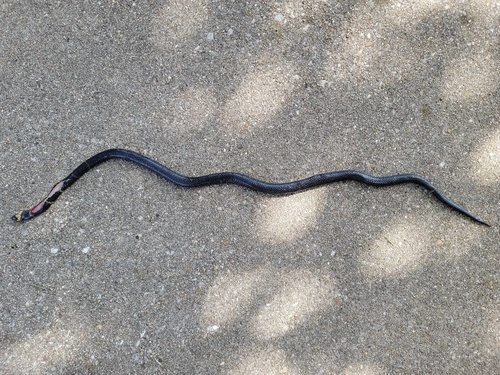
Harmless look-alikes
When and where it's active
Each row is its own calendar, counted from records in that area. Seasons shift by place.
Ecoregions
States
About the Texas Coralsnake
When is the Texas Coralsnake most active?
Across the regions where it's common, the Texas Coralsnake peaks from April to November.
Where does the Texas Coralsnake live?
It has enough records to show in 4 ecoregions and 1 states, including Texas.
Is the Texas Coralsnake venomous?
Yes. The Texas Coralsnake is venomous. Don't handle it, and give it room.
What snakes get mistaken for the Texas Coralsnake?
Harmless lookalikes include the Scarlet Kingsnake, Eastern Milksnake, and Western Milksnake.