Snakes
Western Milksnake
Lampropeltis gentilis
Across the regions where it's common, the Western Milksnake peaks from April to June.
Shows up in 6 ecoregions and 6 states
Keep Herp Calendar free
Hi, I'm Nick. I built Herp Calendar on my own and I keep it free, with no ads. If it has helped you find a herp this season, a small tip goes straight into the hosting and the data work. Only if you can spare it. Either way, I'm glad you're here.
Snakes
Western Milksnake
Lampropeltis gentilis
Description
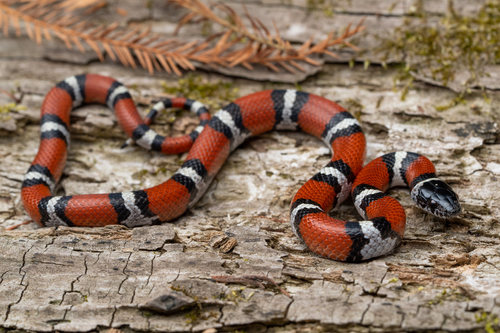
Lampropeltis gentilis, commonly known as the western milksnake, Central Plains milksnake, pale milksnake, Utah milksnake, or New Mexico milksnake, is a species of nonvenomous snake in the family Colubridae.Wikipedia ↗
Habitat
It is found in the United States.Wikipedia ↗
Often mistaken for
When and where it's active
Each row is its own calendar, counted from records in that area. Seasons shift by place.
Ecoregions
States
About the Western Milksnake
When is the Western Milksnake most active?
Across the regions where it's common, the Western Milksnake peaks from April to June.
Where does the Western Milksnake live?
It has enough records to show in 6 ecoregions and 6 states, including Arkansas, Colorado, Kansas, and Nebraska.
What does the Western Milksnake look like?
It's often confused with the Eastern Coralsnake, Texas Coralsnake, and Sonoran Coralsnake.