← Herp Calendar map
Lizards
Texas Spiny Lizard
Sceloporus olivaceus
Across the regions where it's common, the Texas Spiny Lizard peaks from March to October.
Shows up in 7 ecoregions and 1 state
Keep Herp Calendar free
Hi, I'm Nick. I built Herp Calendar on my own and I keep it free, with no ads. If it has helped you find a herp this season, a small tip goes straight into the hosting and the data work. Only if you can spare it. Either way, I'm glad you're here.
Lizards
Texas Spiny Lizard
Sceloporus olivaceus
Look, don't take. Many states regulate collecting reptiles and amphibians. Photograph it, log it on iNaturalist and leave it where you found it.
Description
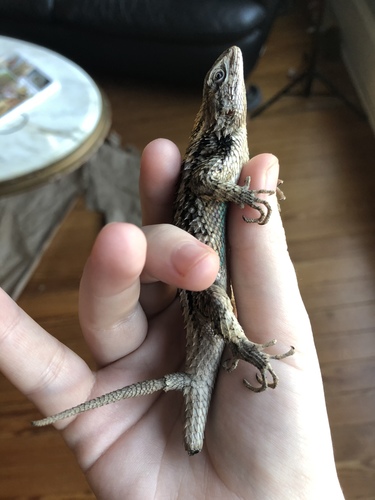
The Texas spiny lizard (Sceloporus olivaceus) is a species of phrynosomatid lizard native to the south central United States, in the states of Texas, Arizona and Oklahoma, and northeastern Mexico in the states of Coahuila, Nuevo León, Tamaulipas, and San Luis Potosí. Adults are 7.5–11 in (19–28 cm) in total length, and are typically grey in color with black, white, or red-brown blotching down the back.Wikipedia ↗
Habitat
Texas spiny lizards (Sceloporus olivaceus) are native to the Nearctic region. Their range extends from southern Tampico, through the Mexican states of Tamaulipas, San Luis Potosi, central Nuevo Leon, and southeastern Coahuila.Animal Diversity Web ↗
When it's active
The Texas spiny lizard will breed throughout the summer months of the year, and is capable of laying four clutches each year if nutrients are plentiful. The Texas spiny lizard is diurnal and arboreal.Wikipedia ↗
When and where it's active
Each row is its own calendar, counted from records in that area. Seasons shift by place.
PeakShoulderQuiet
Ecoregions
JanFebMarAprMayJunJulAugSepOctNovDec
Texas Blackland Prairies and Post Oak SavannaTexas Hill CountrySouthern PlainsGulf Coast Prairies and MarshesCentral Great PlainsChihuahuan DesertHigh PlainsStates
JanFebMarAprMayJunJulAugSepOctNovDec
TexasAbout the Texas Spiny Lizard
When is the Texas Spiny Lizard most active?
Across the regions where it's common, the Texas Spiny Lizard peaks from March to October.
Where does the Texas Spiny Lizard live?
It has enough records to show in 7 ecoregions and 1 states, including Texas.