Snakes
Pygmy Rattlesnake
Sistrurus miliarius
Across the regions where it's common, the Pygmy Rattlesnake peaks from July to October.
Shows up in 4 ecoregions and 6 states · venomous
Keep Herp Calendar free
Hi, I'm Nick. I built Herp Calendar on my own and I keep it free, with no ads. If it has helped you find a herp this season, a small tip goes straight into the hosting and the data work. Only if you can spare it. Either way, I'm glad you're here.
Snakes
Pygmy Rattlesnake
Sistrurus miliarius
Description
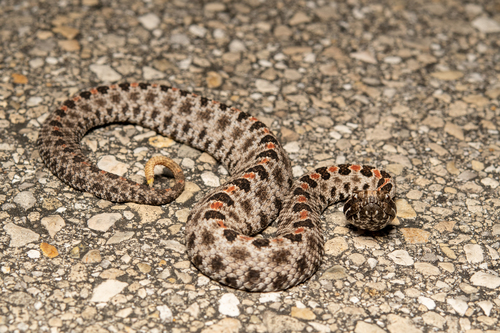
Common names: pygmy rattlesnake, eastern pygmy rattlesnake, ground rattlesnake, leaf rattler, death rattler, more. Sistrurus miliarius is a small species, but bulky in width, with adults usually growing to 40–60 cm (16–24 in) in total length (including tail).Wikipedia ↗
Habitat
Sistrurus miliarius is found in the Southeastern United States from southern and eastern North Carolina, south through peninsular Florida and west to East Texas and Oklahoma. Sistrurus miliarius primarily inhabits flatwoods, sandhills, longleaf pine savannahs, mixed scrub oak forests, and floodplains throughout the sandhills and coastal plains regions, and is also found near lakes and marshes.Wikipedia ↗
When it's active
Sistrurus miliarius is usually seen in the summer sunning itself or crossing the road late in the day. Pygmy Rattlesnakes are generally solitary but become social only during the breeding season.Wikipedia ↗
Venom
This snake produces cytotoxic venom that is strongly hemorrhagic and tissue toxic, but devoid of any neurotoxins.Wikipedia ↗
Harmless look-alikes
When and where it's active
Each row is its own calendar, counted from records in that area. Seasons shift by place.
Ecoregions
States
About the Pygmy Rattlesnake
When is the Pygmy Rattlesnake most active?
Across the regions where it's common, the Pygmy Rattlesnake peaks from July to October.
Where does the Pygmy Rattlesnake live?
It has enough records to show in 4 ecoregions and 6 states, including Arkansas, Florida, Georgia, and Missouri.
Is the Pygmy Rattlesnake venomous?
Yes. The Pygmy Rattlesnake is venomous. Don't handle it, and give it room.
What snakes get mistaken for the Pygmy Rattlesnake?
Harmless lookalikes include the Gopher Snake, Pine Snake, and Eastern Hognose Snake.