Snakes
Prairie Kingsnake
Lampropeltis calligaster
Across the regions where it's common, the Prairie Kingsnake peaks from March to July.
Shows up in 6 ecoregions and 6 states
Keep Herp Calendar free
Hi, I'm Nick. I built Herp Calendar on my own and I keep it free, with no ads. If it has helped you find a herp this season, a small tip goes straight into the hosting and the data work. Only if you can spare it. Either way, I'm glad you're here.
Snakes
Prairie Kingsnake
Lampropeltis calligaster
Description
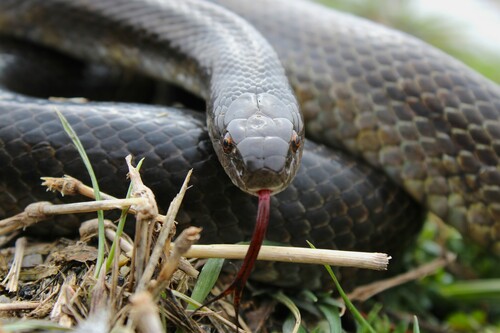
Lampropeltis calligaster is a species of kingsnake known commonly as the prairie kingsnake or yellow-bellied kingsnake. Prairie kingsnakes are light brown or grey-brown in color, with dark reddish-brown blotching down the dorsal length of their bodies.Wikipedia ↗
Habitat
Prairie kingsnakes are found across 13 states in the midwestern and southern United States. Prairie kingsnakes primarily use prairie, pasture, and shrublands, less often use forests, and appear to never use croplands or cross roads, which may fragment their habitat and be barriers to movement.Wikipedia ↗
When it's active
Females maintain an average body temperature nearly two degrees Celsius higher than males, which may help females grow faster, reach earlier reproductive maturity, or develop larger clutch sizes. Richardson et al. (2006) radio-tracked prairie kingsnakes in Illinois and found that they were usually underground during the day, so they are probably mostly nocturnal.Wikipedia ↗
Often mistaken for
When and where it's active
Each row is its own calendar, counted from records in that area. Seasons shift by place.
Ecoregions
States
About the Prairie Kingsnake
When is the Prairie Kingsnake most active?
Across the regions where it's common, the Prairie Kingsnake peaks from March to July.
Where does the Prairie Kingsnake live?
It has enough records to show in 6 ecoregions and 6 states, including Arkansas, Illinois, Kansas, and Missouri.
What does the Prairie Kingsnake look like?
It's often confused with the Western Diamond-backed Rattlesnake, Prairie Rattlesnake, and Western Rattlesnake.